The rapid shift towards remote and hybrid work models has changed the way businesses operate, with distributed teams becoming the norm rather than the exception. As companies continue to adapt to this new environment, a growing number of organizations are turning to Bring Your Own Device (BYOD) policies as a means to enhance productivity and streamline operations. One such solution gaining traction in the remote workforce landscape is Hypori, a platform designed to enable secure, seamless, and efficient access to corporate resources while allowing employees to use their personal devices.
In this article, we’ll explore how BYOD improves productivity within distributed workforces and examine how Hypori plays a key role in this transformation.
The Benefits of BYOD for Distributed Workforces
As the workplace becomes more distributed, employees require flexible tools to stay productive. BYOD, which allows employees to use their personal devices for work-related tasks, offers a variety of benefits that can improve productivity in a remote environment.
Enhanced Flexibility and Convenience
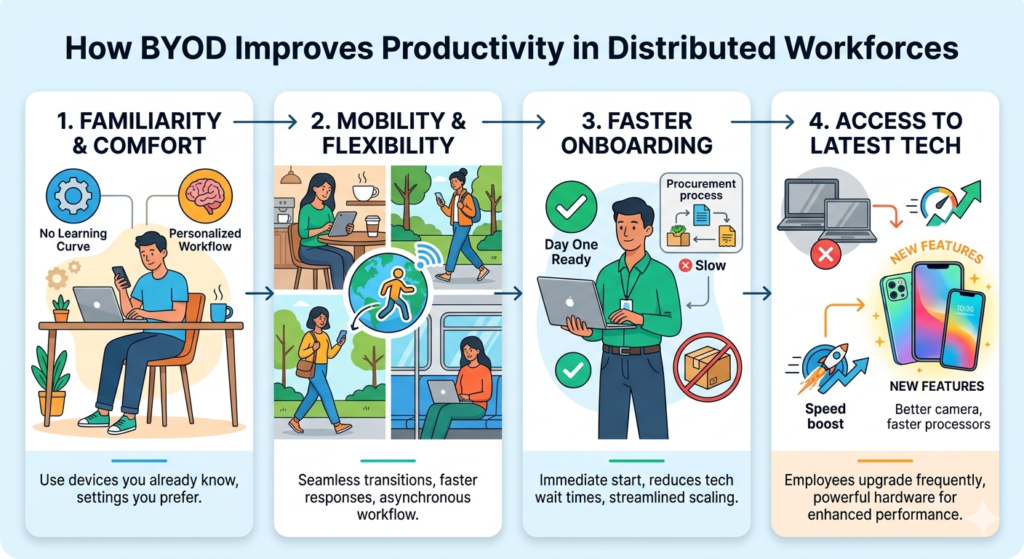
One of the primary advantages of a BYOD policy is the flexibility it offers employees. Personal devices are often more familiar and comfortable for workers, which allows them to be more efficient. Since employees can access work-related applications and files from their own devices, they can seamlessly transition between home, office, and other remote locations without losing productivity. This flexibility also enables employees to work during times that best suit their schedules, resulting in higher engagement and productivity.
For businesses, allowing employees to bring their own devices means less reliance on corporate-issued equipment, which can be expensive to manage and maintain. Employees can use the devices they are most comfortable with, improving their overall work experience and ensuring smoother day-to-day operations.
Cost-Effectiveness for Organizations
From an organizational perspective, implementing a BYOD policy can significantly reduce hardware-related expenses. Traditionally, businesses had to purchase, maintain, and replace a large number of devices for their employees. However, BYOD policies reduce these costs by leveraging the devices employees already own. As a result, businesses can allocate those savings toward other business priorities, such as software tools or employee development programs.
Additionally, BYOD allows organizations to save on training costs, as employees are already familiar with their personal devices. This reduces the learning curve associated with new tools and enables employees to begin working immediately without extensive onboarding for unfamiliar equipment.
Improved Employee Satisfaction and Engagement
BYOD policies also improve employee satisfaction. When employees are given the freedom to use the devices they prefer, it enhances their work-life balance and reduces the frustration that can come with using unfamiliar or restrictive company-issued devices. With the comfort of personal technology, employees feel empowered to manage their work in a way that best suits their individual preferences and lifestyle.
This increased autonomy fosters a sense of trust between employees and employers, which can lead to higher levels of job satisfaction. A more satisfied workforce is not only more productive, but it is also more likely to stay engaged with the company for the long term.
The Role of Hypori in Supporting BYOD and Enhancing Productivity
While BYOD offers significant benefits, it does come with its own set of challenges, particularly around security and compliance. Allowing employees to access corporate data from personal devices raises concerns about potential data breaches, unauthorized access, and the management of sensitive information. This is where platforms like Hypori come in to support BYOD policies and improve productivity in distributed teams.
Secure Access to Corporate Resources
Hypori provides a solution that allows employees to access corporate resources securely from their personal devices. Unlike traditional virtual private network (VPN) solutions, Hypori creates a virtual desktop environment that mirrors the experience of using a corporate device, without compromising the security of sensitive data.
With Hypori, employees can access the same work applications, files, and tools that they would on a company-issued device, but they do so without actually storing any sensitive data on their personal devices. This approach aligns with insights shared by Hypori on protecting high-risk communication channels like enterprise messaging, where safeguarding data is critical. This helps prevent the risk of data loss or theft, as all information remains securely in the cloud.
Furthermore, Hypori’s secure environment allows IT teams to enforce company security policies across personal devices, ensuring compliance with industry regulations and protecting company data from cyber threats. This peace of mind for IT departments is a critical factor in making BYOD policies viable, as it mitigates the risks associated with allowing employees to use their own devices for work.
Simplified Device Management
Hypori’s platform makes managing a fleet of personal devices much easier for IT teams. Since employees can bring their own devices, businesses no longer have to deal with the complexity of managing a large inventory of company-issued hardware. Hypori’s cloud-based management tools allow IT administrators to monitor and manage the devices employees use, ensuring that security patches, updates, and configurations are kept up to date across all devices.
This approach reduces the administrative burden of device management and ensures that the organization’s technology infrastructure remains secure. With Hypori, businesses can streamline IT processes and reduce the overhead typically associated with supporting a variety of devices across a remote workforce.
Enhanced Collaboration and Workflow Efficiency
One of the most significant advantages of BYOD, facilitated by Hypori, is the ability to enhance collaboration within distributed teams. With a platform that offers seamless access to corporate resources from any device, employees can easily collaborate with colleagues, regardless of their location. Hypori’s integration with cloud-based tools ensures that employees can share files, communicate, and work together on projects without the barriers of different operating systems or devices.
Additionally, Hypori’s virtual desktop functionality eliminates the need for employees to constantly switch between personal devices and corporate networks. By using a consistent, virtualized desktop experience across all devices, employees can maintain their workflow without disruptions, improving overall productivity.
Support for Remote Work and Global Teams
With distributed teams often spanning across different time zones and locations, it’s essential for businesses to implement solutions that allow employees to work as though they were in the same office. Hypori’s BYOD solution allows employees from different regions to access the same work environment, ensuring they have access to the tools and resources they need at any time.
This global accessibility is particularly important for businesses with remote teams working in different parts of the world. Whether an employee is in the United States, Europe, or Asia, Hypori ensures that they can access their corporate desktop environment and maintain their productivity, regardless of where they are based.
Addressing Security Concerns with BYOD
While BYOD policies are beneficial, security remains a key concern for organizations looking to adopt this model. Personal devices are more vulnerable to security threats, and businesses must take extra precautions to protect sensitive company data.
By using Hypori, businesses can address these concerns head-on. Hypori’s platform offers advanced security features, including encrypted data transmission, secure authentication, and the ability to manage access control. This allows organizations to provide employees with secure access to corporate data without compromising on performance or user experience.
Moreover, Hypori’s zero-trust security model ensures that only authorized users can access corporate resources, reducing the risk of unauthorized access and data breaches. For businesses in highly regulated industries, Hypori’s compliance features make it easier to maintain industry standards and protect sensitive information.
Conclusion: The Future of BYOD and Productivity in Distributed Workforces
As remote work continues to dominate the business landscape, BYOD will play an increasingly important role in improving productivity and employee satisfaction. With platforms like Hypori, businesses can embrace BYOD policies without compromising security, compliance, or performance.
The benefits of BYOD are clear—enhanced flexibility, cost savings, increased employee satisfaction, and improved collaboration. Hypori’s secure, cloud-based solutions are designed to ensure that employees can access corporate resources from their personal devices without exposing sensitive data to unnecessary risks. By adopting this approach, businesses can foster a more productive, engaged, and secure remote workforce.
Ultimately, the future of distributed workforces depends on providing employees with the right tools and technologies to succeed. Hypori’s innovative platform is a key player in making BYOD policies both effective and secure, enabling businesses to thrive in an increasingly digital world.