AI resume tools have grown rapidly since large language models became mainstream. Many platforms now promise optimized phrasing, keyword alignment, and faster drafting.
At the same time, applicant tracking systems filter a large percentage of resumes before they reach a recruiter. This has increased demand for tools that help candidates structure their experience more strategically.
StoryCV enters this market with a narrower focus. Instead of offering templates or full resume design workflows, it concentrates on generating structured resume bullet points through conversation.
This review examines how the system works, where it fits in the broader AI resume ecosystem, and what trade-offs users should consider.
What Is StoryCV?
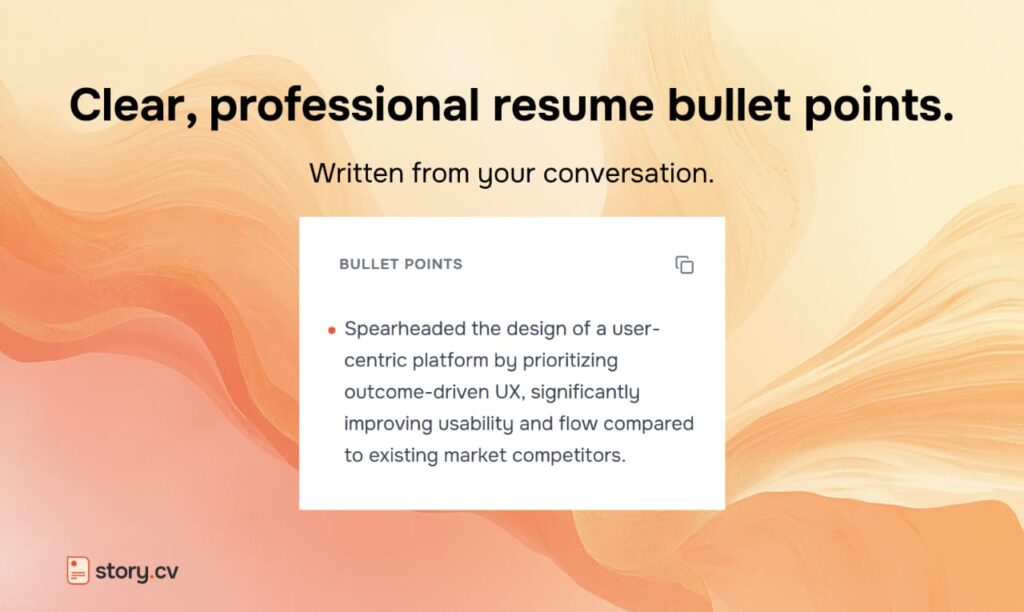
StoryCV is an AI resume writer designed to help users translate experience into structured, role-aligned resume content.
It collects user input through text or voice conversation and transforms that input into structured, action-oriented bullet points.
Unlike template-based resume builders, it does not provide built-in visual layouts. Its primary output is copyable resume content.
The platform centers on three functional goals:
- Extracting detailed context from user input
- Structuring experience into resume-ready bullet points
- Encouraging measurable and outcome-driven phrasing
It does not market itself as a full career platform. It focuses on content transformation.
Read also Freed AI Review: The Ultimate Guide for Clinicians
How StoryCV Works
The workflow can be divided into three stages.
1. Conversational Input
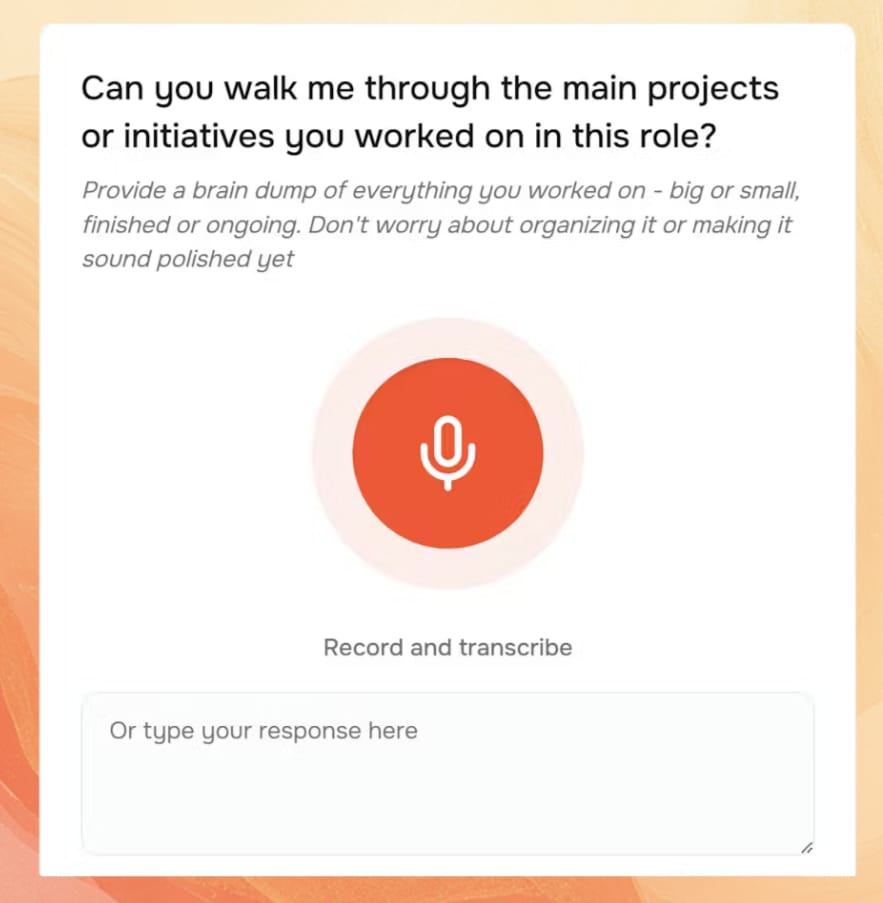
Users describe their work experience in natural language. They can type or speak.
This differs from traditional resume forms, which often require filling predefined fields. The conversational approach attempts to surface more detail before imposing structure.
From a machine learning perspective, this input phase likely relies on natural language understanding to identify roles, actions, outcomes, and metrics.
2. Structured Bullet Generation
The system converts raw descriptions into:
- Action-driven bullet points
- Role-aligned phrasing
- Suggested measurable framing where possible
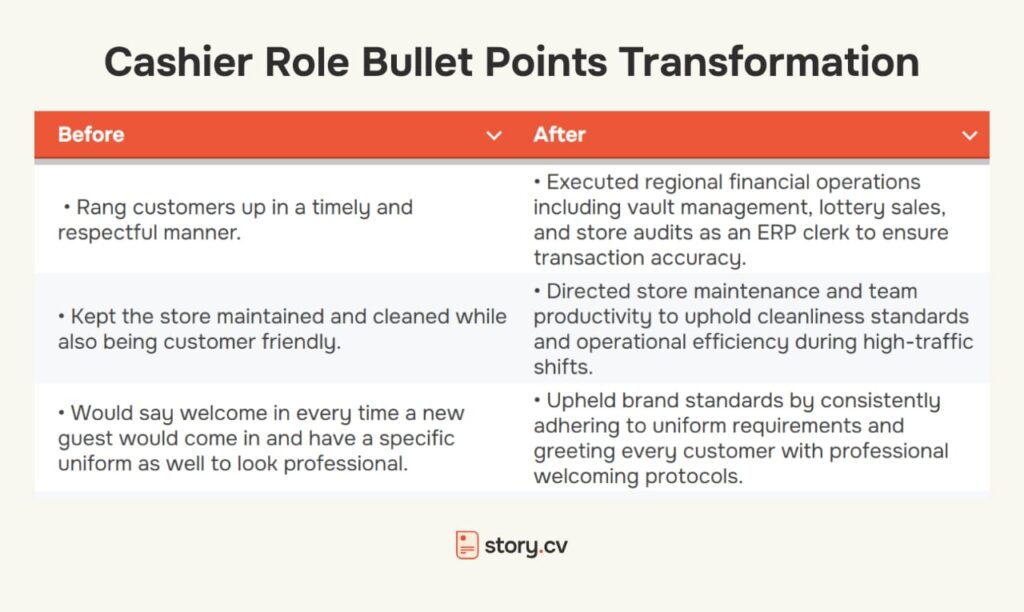
For example:
Raw input:
“I worked with sales on onboarding customers.”
Generated output may resemble:
“Collaborated with cross-functional sales teams to streamline customer onboarding workflows.”
The transformation reflects structured rewriting rather than free-form generation. The system appears to prioritize professional tone and action verbs.
The platform does not disclose its underlying model architecture. However, the observable behavior suggests a structured transformation pipeline rather than simple text paraphrasing.
3. Bullet Point Export
The final output consists of resume-ready bullet points that users can copy and paste into their own documents.
StoryCV does not include resume templates, design customization, or formatting tools. The emphasis remains on text generation.
How StoryCV Differs From Template-Based Resume Builders
Most resume builders follow this sequence:
- Choose a template
- Fill out structured fields
- Use AI to rephrase content
- Export a formatted resume
StoryCV reverses that order. It begins with open-ended conversation. Formatting is external to the platform.
This approach has implications.
Open-ended input can produce richer context. However, it also places more responsibility on the user to articulate experience clearly.
The tool positions itself closer to an AI-assisted writing interface than a design-driven resume builder.
Feature Evaluation
AI Narrative Structuring
The system encourages users to frame experience in terms of actions and outcomes rather than responsibilities alone.
This aligns with common recruiter advice, which emphasizes measurable impact.
However, users should review outputs carefully. AI systems may generalize phrasing or imply metrics that were not explicitly stated.
Voice-to-Text Input
Voice input lowers the barrier and friction to starting. Some users find it easier to explain their work verbally.
From a technical standpoint, speech recognition adds another processing layer. Transcription accuracy affects final bullet quality. Errors introduced during speech-to-text conversion may propagate into the resume output. Users must review the transcribed text properly before submitting.
Iterative Refinement
The platform provides iterative suggestions. Users can refine bullet points instead of accepting a single output.
This interactive loop mirrors prompt engineering workflows used in generative AI applications. The user remains in control while the system offers structured improvements.
Strengths
Strengths
1. Focused Scope
StoryCV limits its functionality to resume bullet generation. This reduces feature sprawl and keeps the workflow simple.
2. Context Capture
Conversational input can surface details that structured forms often miss. This may improve the depth of certain bullet points.
3. Lower Cognitive Friction
For users intimidated by blank resume templates, conversation may feel more accessible.
Limitations
1. No Resume Templates or Design Tools
StoryCV does not provide resume templates or layout customization.
Users must export bullet points and format them separately. This limits its usefulness as an end-to-end resume solution.
2. Requires User Strategy
The system structures information but does not determine career direction.
Users must still decide:
- Which roles to target
- Which achievements to emphasize
- How to position industry transitions
AI-generated bullets do not replace strategic career thinking.
3. Dependent on Input Quality
If users provide vague descriptions, outputs remain broad.
The system does not independently verify metrics or infer missing performance data.
Who Should Consider Using It
StoryCV may be suitable for:
- Early-career professionals unsure how to phrase achievements
- Career returners needing help structuring experience
- Non-native English speakers seeking professional tone
It may be less suitable for:
- Users seeking fully designed resumes
- Professionals who want integrated ATS scoring or keyword analytics
- Candidates looking for bundled cover letter and LinkedIn optimization features
Pricing: What StoryCV Costs
StoryCV offers a tiered pricing model designed to let users try the core experience for free and upgrade if they need more capacity and flexibility.
Free Tier
- $0 (Free)
Users can generate content for one free role with full editing and reuse rights.
This lets you sample the system and see how well it captures your narrative before paying.
Full Story Subscription
- $39 per month (early pricing, down from $59/month)
This unlocks unlimited role generation and allows you to enter multiple jobs, projects, and achievements without caps.
This subscription is billed monthly and retains the discounted rate as long as the subscription remains active.
Keep in mind that while StoryCV generates content, it does not include resume template layouts or designs — you’ll need to export the narrative and format it elsewhere.
Read also TurboLearn AI Review: The Ultimate Study Hack for 2026?
Final Verdict
StoryCV does not attempt to replace traditional resume builders. It isolates one part of the resume creation process: turning informal experience into structured bullet points.
This specialization reduces complexity but also limits feature breadth.
For users who struggle to articulate achievements, the conversational model may offer practical support.
As with most AI writing tools, effectiveness depends heavily on input clarity and user oversight.